The Case Against Giant Traffic Robots

The towering figures are an eye-catching distraction from a lack of infrastructure planning in the Democratic Republic of Congo's ever-growing capital.
Kinshasa, the sprawling capital of the Democratic Republic of Congo, is trying an unusual approach to the city's notoriously frenetic traffic situation.
As first reported by AFP, Kinshasa installed three new robots last week to help direct traffic (two others were unveiled in 2013). The giant, Transformer-esque figures (which sport tinted sunglasses) tower over busy intersections, equipped with traffic lights and cameras that are meant to assist human police officers with issuing tickets for traffic violations. They can rotate in order to direct pedestrians through intersections when it is safe to cross. The Al-Jazeera video below explains their functionality in more depth.
The robots were developed by Women's Technology, an association of female engineers in the DRC. They are certainly eye-catching, and may actually improve traffic flow at the points in the city where they are posted. But this is not a legitimate solution for a city bursting at the seams with informal urbanization. The robots are basically glorified traffic lights—which Kinshasa needs more of in general. It's a public relations stunt that that turns attention away from serious growth and infrastructure issues in the city.
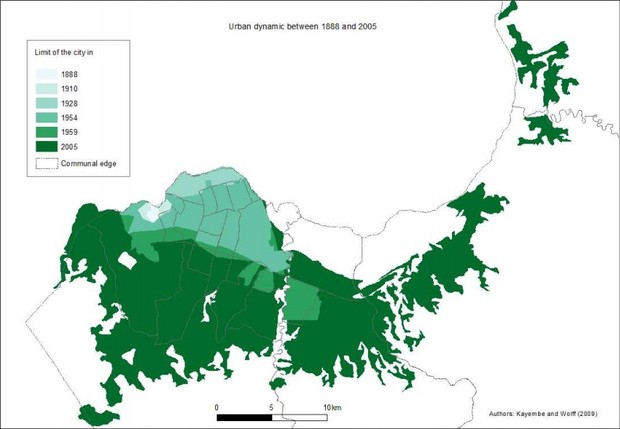
Shown above, Kinshasa, one of two megacities in sub-Saharan Africa, hasn't been expanding along dense intersections, where these robots are being placed. Rather, the city's alarmingly fast growth is happening on its isolated periphery.
"[U]rban planning and state services are quasi absent," on these outskirts, according to a 2011 report on Kinshasa by the University of Antwerp. A recent study published in the Journal of Sustainable Development also found the DRC's urban policymaking to be driven by "vague or unclear priorities." Such entrenched municipal dysfunction is happening amid a population exploding toward 20 million residents by 2030 (up from 10 million today), according to U.N. projections.
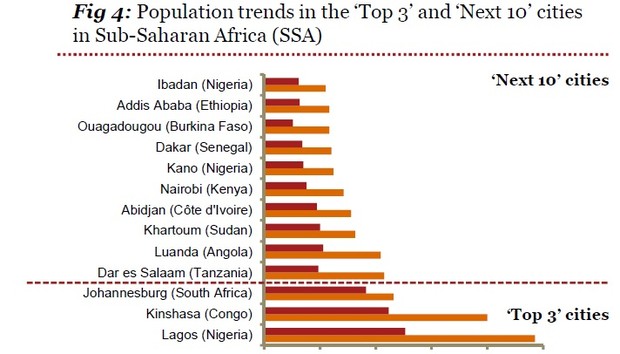
The kleptocratic Congolese government is likely using this project to portray itself as having forward-thinking urban planning strategies. How better to cast a city's "modernization" than to set up futuristic robot traffic police? In reality, however, city officials are vastly underserving their constituents.
Got to love DR Congo. They have hardly any paved roads left after the civil war but they've just introduced solar powered robot policemen.
— Samuel (@50degreesam) March 5, 2015
Kinshasa rolled out its first robots a year after scheduled municipal elections were never held. When protests broke out across the city this year following reports that the Congolese president was planning to extend his term, these new robots showed up soon after the unrest died down.
Robotwashing: It's the flashy, modern way to distract the public from scrutinizing bad governance—and even worse urban planning.


Comments
Post a Comment